
How to Search San Bernardino County Court Records
The Court Access Portal, called CAP, is the front door for San Bernardino County Court records. It lives at cap.sb-court.org and covers case search, citation lookup, party search, business search, court calendars, online case payment, and a warrant route. Case data is free to view. Civil document images, when sold online, run $0.50 per page through the legacy court page at old.sb-court.org. Most online coverage starts at 1998. Older paper files live at the district where the case was filed.
A few things help before searching. Have the case number, the citation number, or the full party name ready. If only the party name is known, the system requires a free CAP login for party and business searches. Wildcards work too. Use at least two letters plus an asterisk for a person, three letters plus an asterisk for a business.
The Superior Court Access Portal home page is available at cap.sb-court.org.
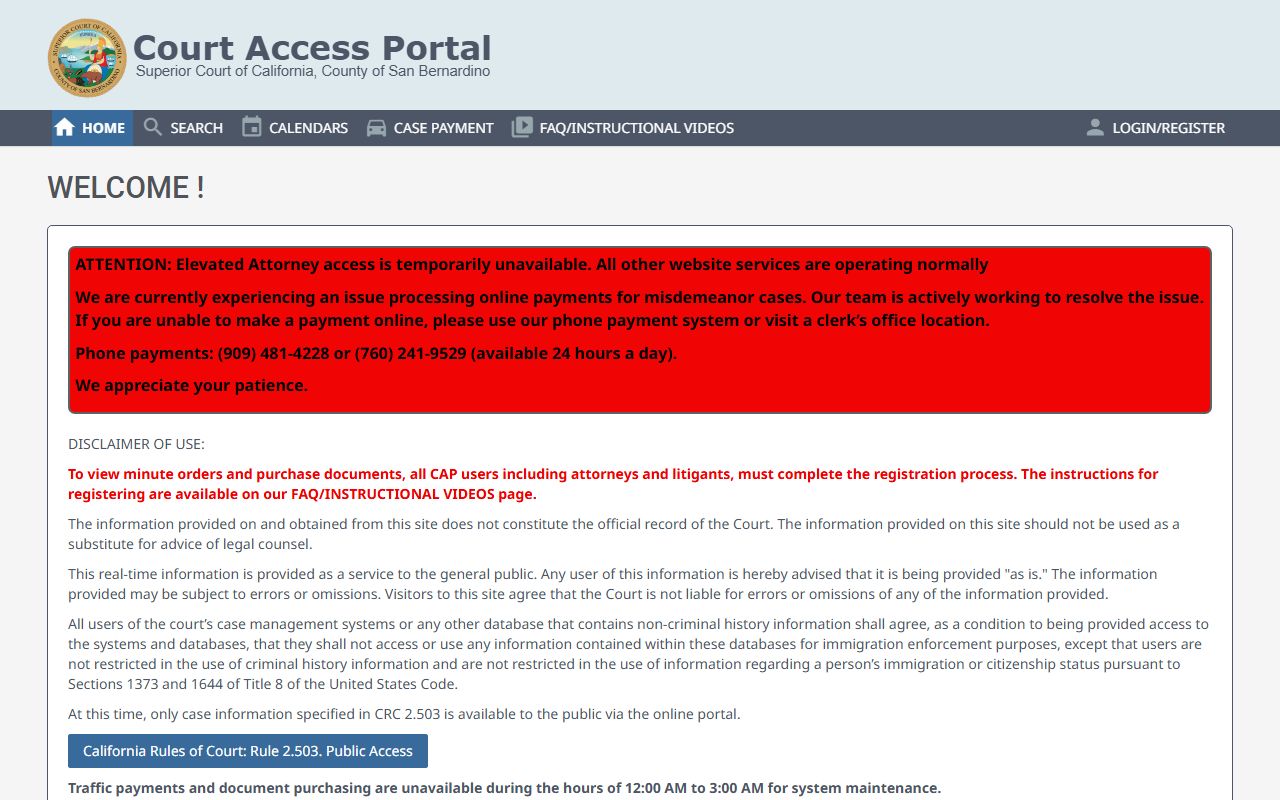
From the CAP landing page, pick the right panel for the search type and follow the steps below.
- Open cap.sb-court.org/search and pick the Case Number, Citation Number, Party Name, or Business Name panel.
- Type the value. Case and citation numbers take 5 to 20 alphanumeric characters. Name search needs at least two letters for first and last.
- Add a date of birth if known. This narrows the results when a name is common.
- Pass the reCAPTCHA challenge if logged out. Click Search.
- Open a case to read the tabs: Case Info, Parties, Events, Hearings, Causes, Documents, Arrest/Charges/Dispo, Bonds/Warrant, Related, and Financials.
- For a certified copy, contact the district counter listed on the case. Online image fees run $0.50 per page where the image is available.
Note: CAP runs a nightly maintenance window from 3:30 a.m. to 4:30 a.m., so searches done at that hour may fail.
The San Bernardino County Judicial System
California sits at the top of a four-step court ladder. The California Supreme Court is final. Below it sit the Courts of Appeal. Each county runs one Superior Court. For limited civil, misdemeanor, and infraction appeals, a Superior Court Appellate Division handles the first appeal. San Bernardino County's appellate division meets at the Rancho Cucamonga court at 8303 Haven Avenue. Cases beyond that route head to the Fourth Appellate District, Division Two, which sits in Riverside.
The state unified its trial courts in 1998 under Proposition 220. That move ended the old split between municipal courts and superior courts. Today, every trial case in the county starts in the Superior Court of California, County of San Bernardino. Numbered or "named" courts do not exist here the way they do in Texas. Instead, the work is split by district and division: civil, criminal, family law, probate, juvenile, traffic, and small claims.
Case flow: Superior Court › Superior Court Appellate Division › California Court of Appeal (Fourth Appellate District, Division Two) › California Supreme Court
| Court | Role | Case Types |
|---|---|---|
| Superior Court | Trial court | Civil, criminal, family, probate, juvenile, traffic, small claims |
| Superior Court Appellate Division | First-step appeals (limited cases) | Limited civil, misdemeanor, infraction |
| Court of Appeal, 4th District, Div. Two | Intermediate appeals | Felony, unlimited civil, family, probate appeals |
| California Supreme Court | State court of last resort | Discretionary review; death-penalty direct appeals |
Federal matters from the county route to the U.S. District Court for the Central District of California, with appeals to the Ninth Circuit.
San Bernardino County Courthouses
The court runs 13 facilities across the county. The Justice Center on West Third Street is the central courthouse and the home of the Probate Division. Family Law sits a few blocks away on North Arrowhead Avenue. The Appeals and Appellate Division meets at Rancho Cucamonga. Outlying districts cover Barstow, Big Bear, Fontana, Joshua Tree, Needles, Victorville, Chino, and Redlands. Each district handles the cases set by its geographic case-number code, so a case filed in Victorville keeps a VS prefix even after county-wide unification in 1998.
San Bernardino Justice Center
247 West Third Street
San Bernardino, CA 92415-0212
909-521-3388
San Bernardino Family Law
351 North Arrowhead Avenue
San Bernardino, CA 92415-0245
909-521-3136
Appeals / Appellate Division
8303 Haven Avenue
Rancho Cucamonga, CA 91730
909-384-1888
The legacy court domain at www.sb-court.org hosts the rest of the location pages, current forms, and filing rules.
Hours at the public counter run Monday through Friday, 8:00 a.m. to 4:00 p.m., with the lobby doors opening at 7:30 a.m.
Types of Court Records Available in San Bernardino County
Every Superior Court case generates records. Some are simple. A small claims file may run only ten pages. Others, like a probate case with real property and contested heirs, can stretch over years. CAP holds the index and most filings from 1998 forward. Pre-1998 cases may need a call to the district where filed. The current Superior Court website is the official front door at sanbernardino.courts.ca.gov.
The categories below cover most of what the public looks for.
- Civil records - Limited and unlimited civil cases. Includes complaints, answers, motions, orders, judgments, and writs.
- Criminal records - Felony and misdemeanor charges, arraignment minutes, dispositions, sentencing, and probation.
- Family records - Divorce, custody, support, parentage, domestic violence, and adoption.
- Probate records - Estates, wills, guardianships, and conservatorships.
- Traffic court records - Citations, infractions, misdemeanor traffic, and DUI cases routed to criminal.
- Small claims and landlord-tenant - Unlawful detainer, evictions, and small money disputes. CAP has a dedicated landlord-tenant search.
- Juvenile and mental health - Restricted under Welfare and Institutions Code 827 and case-by-case sealing rules.
What San Bernardino County Court Records Show
A CAP case opens to a header with the case number, the case caption, status flags, and a warrant flag where one exists. Below that sit tabs. Case Info gives the high-level facts. Parties names every plaintiff, defendant, petitioner, or respondent. Events tracks every filing and entry. Hearings tracks past and future court dates. Causes lists charges or claims. Documents shows the actual filings, where they have been digitized. The fields below are what a public viewer sees on most cases.
| Field | What It Shows |
|---|---|
| Case Number | Unique court ID with a jurisdiction code (SS, DS, JS, RS, VS, BS, MS, NS, CS, FS, ES, PS, HS). |
| Citation Number | Officer-issued ticket number for traffic and some misdemeanor cases. |
| Filing Date | Date the complaint, petition, or citation was filed with the court. |
| Case Status | Active, Disposed, Failure to Appear, Warrant, Stayed, or Sealed. |
| Parties | Each named party, plus aliases (AKA) where listed. |
| Judicial Officer | The assigned judge or commissioner. |
| Charges / Causes | Each Vehicle Code, Penal Code, or civil cause cited, with classification. |
| Disposition | Outcome of each charge or claim: dismissed, convicted, settled, judgment for, judgment against. |
| Financials | Bail, fines, civil assessments, restitution, and any installment plan balance. |
Date of birth shows as XXXX-XX-XX in the public criminal view. Race, sex, height, weight, driver's license number, and FBI number need a secured login to view. The court redacts these fields by default.
Public Access Laws for San Bernardino County Court Records
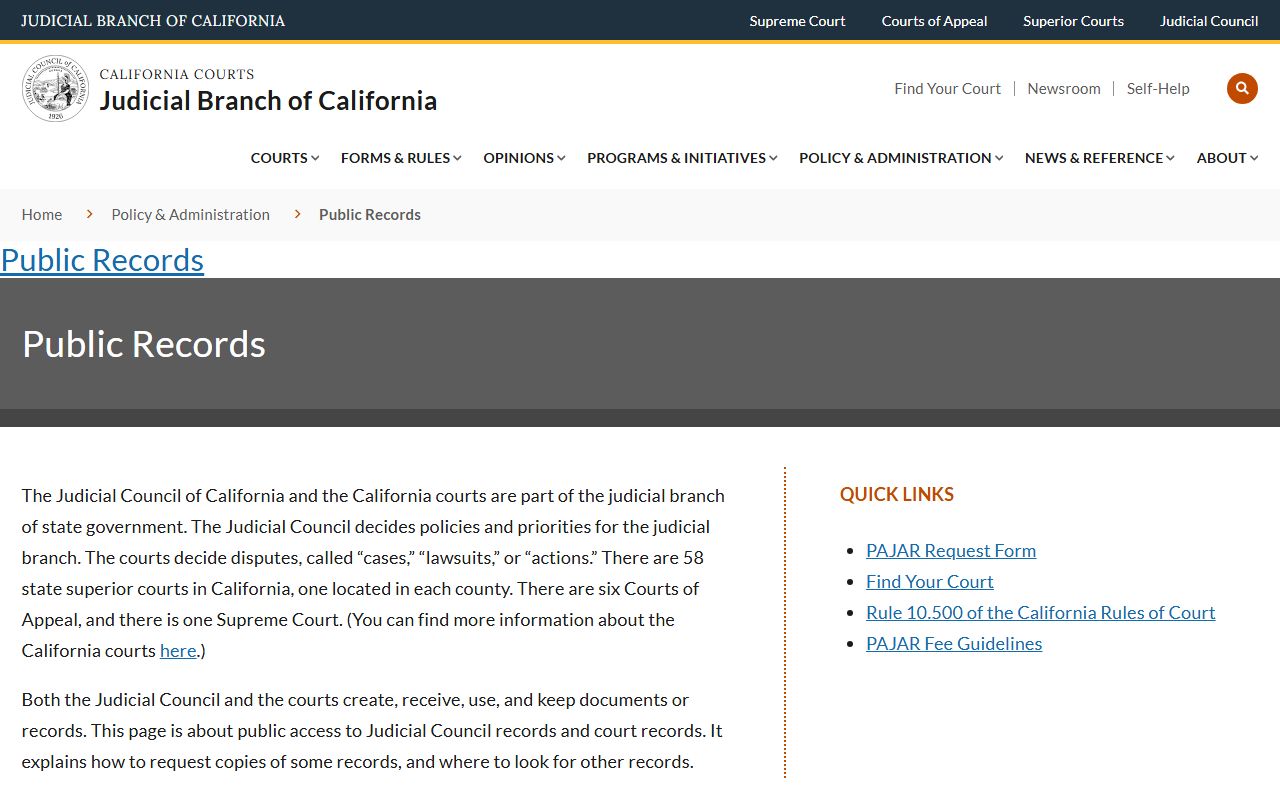
Court records in California sit under three separate access systems. The California Public Records Act covers state and local agency records. California Rules of Court 10.500 covers judicial administrative records. A separate set of court rules governs case file access, sealing, and confidentiality. Most regular case-file lookups fall under that third bucket. The Judicial Branch keeps a current overview at the Judicial Branch public records page.
The image of that page is shown next to the statute list below.
The state has its key access rules pinned to specific code sections. Each link points to the official state code or rule.
Key Statutes and Rules:
Cal. Gov. Code § 7920.000 - California Public Records Act, recodified. Sets the rule for public agency records (not ordinary court case files).
Cal. Rule of Court 10.500 - Public access to judicial administrative records. Sets a 10-day determination period and allowed fees.
Cal. Rule of Court 2.550 - Substantive standards for sealing court records. The court must make findings on the record.
Cal. Gov. Code § 68152 - Trial court records retention. Probate and felony judgments often kept permanently.
Cal. Welf. & Inst. Code § 827 - Juvenile case files are confidential. Access is limited to listed persons and agencies or by court order.
The court has its own administrative records request form for non-case material at the San Bernardino Superior Court administrative records page.
Records That Are Restricted or Confidential
Not every San Bernardino County Court record is public. Juvenile delinquency and dependency files are closed by default. Sealed records require a court motion under California Rule of Court 2.551 and a finding under 2.550. Adoption records, confidential marriages, mental health proceedings, and some elder abuse files are also closed or partly closed. Even on public criminal records, the public view masks date of birth and many demographic fields. The state criminal history kept by the Department of Justice is a separate system under Penal Code 11105 and is not a general public lookup.
California uses the word "expungement" loosely. Most relief actually comes from Penal Code 1203.4, which dismisses a conviction after probation. Arrest sealing for nonconviction arrests runs under Penal Code 851.91. Factual innocence sealing under 851.8 is stronger and harder to win. None of these moves erase the file completely. The records stay in the case index, but the conviction or arrest is treated as dismissed or sealed for most uses.
Specialty Courts in San Bernardino County
The Superior Court runs problem-solving courts that mix judicial oversight with treatment and support. The county Mental Health Court pairs a judge with community mental health staff to manage qualifying defendants. It sits inside the criminal and probate/mental health workflow rather than as a separate court. Eligibility, program length, and graduation pace are set by the court team and the assigned judge.
The Sheriff also runs alternatives outside the standard jail track. The Work Release program lets lower-risk sentenced people serve through volunteer work crews. The Electronic Confinement Unit, or ECU, uses GPS monitoring at home. Both programs are authorized by the Board of Supervisors. Some in-custody people qualify for GPS release after psychotherapeutic course work. The Work Release and ECU intake line is 909-473-2580, seven days a week.
San Bernardino County Sheriff and Jail
Sheriff-Coroner Shannon D. Dicus took office on June 7, 2022. The department fields about 2,007 sworn deputies and 2,073 professional staff, serves over 2.1 million residents across more than 20,056 square miles, and runs a detentions budget over $336 million. It posts about 965,959 calls for service and 111,285 reports each year. The full Sheriff site lives at wp.sbcounty.gov/sheriff.

The Detention and Corrections Bureau runs four main adult facilities: Central Detention Center in San Bernardino, Glen Helen Rehabilitation Center in Devore, High Desert Detention Center in Adelanto, and West Valley Detention Center in Rancho Cucamonga. The system has 7,400 beds, an average daily population near 5,000, and about 85,000 bookings each year. The visiting line is 909-887-0364. The bail information line is 909-350-2476.
For person-by-person lookup, the booking and release search lives at jimsnetil.shr.sbcounty.gov. The same page powers the San Bernardino County inmate records tool and the released inmates log. Check warrant records for any active warrant tied to a case.
Marriage, Divorce, and Probate Records
Marriage license issuance and marriage certificate copies are handled by the Assessor-Recorder-County Clerk (ARC), not by the court. The ARC also records deeds, fictitious business names, and vital records. Josie Gonzales took office as the elected ARC in January 2025. The ARC office is at 222 West Hospitality Lane, with the Recorder-Clerk line at 909-387-8306.
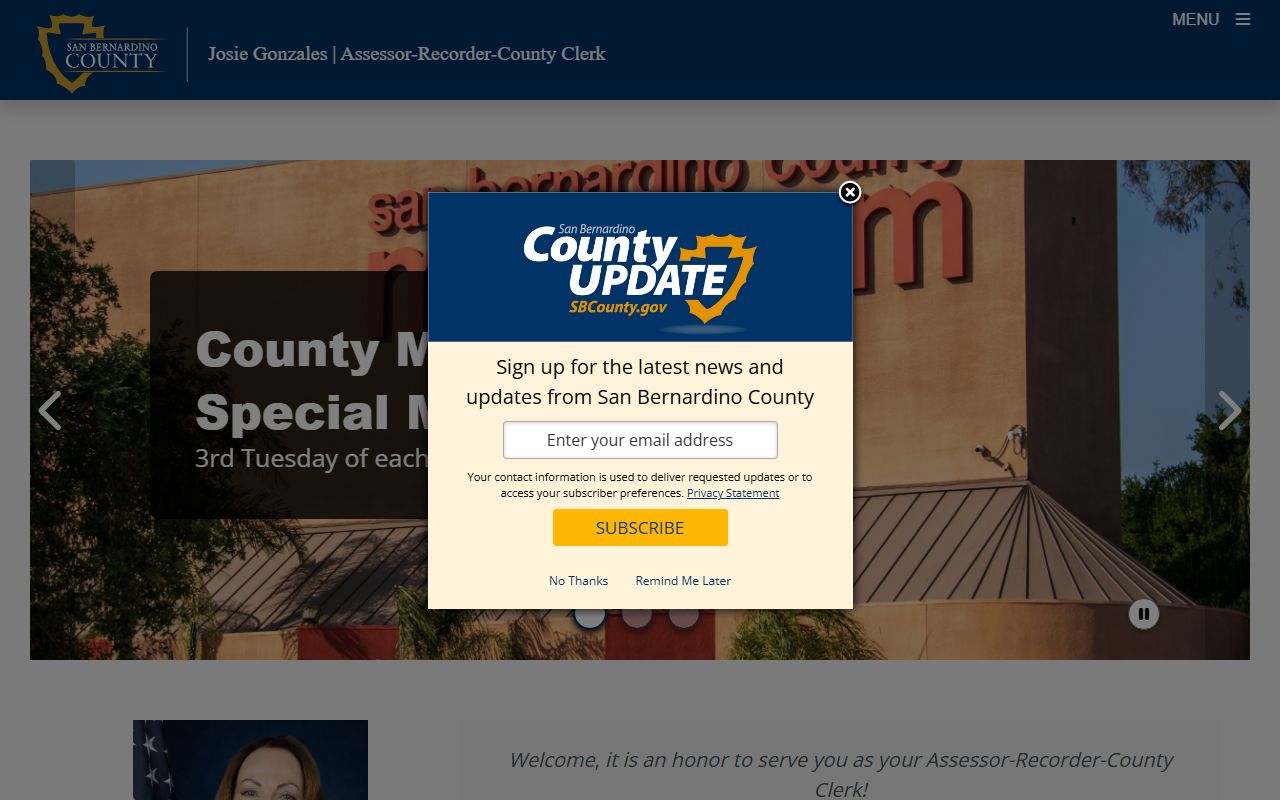
Divorce records are court records, not ARC records. They live in the Family Law division at 351 North Arrowhead Avenue. The ARC is clear about this split. For full coverage, see marriage and divorce records and probate records. Probate moves through the Justice Center under standard California rules.
- Testator
- A person who has made and signed a valid will under California law.
- Executor
- The person named in a will to gather the estate, pay debts, and pass property to heirs.
- Conservator
- A court-appointed adult who manages the person or estate of someone who cannot do so alone.
San Bernardino County Court Records Fees
Most case lookup is free. Charges kick in for paper copies, certified copies, and court-recorded vital records. The ARC fee schedule below covers the most common requests. Court case copies are handled by the district counter that holds the file. Civil document images sold through the legacy court site run $0.50 per page where the image is online.
| Item | Amount |
|---|---|
| Official record certified copy, first page (ARC) | $4 |
| Official record certified copy, each added page (ARC) | $2 |
| Official record non-certified copy, first page (ARC) | $3 |
| Official record non-certified copy, each added page (ARC) | $1 |
| Birth certificate (ARC) | $34 |
| Death certificate (ARC) | $26 |
| Marriage certificate (ARC) | $19 |
| Civil document image, online per page (court) | $0.50 |
| Civil document image cap per document (legacy court page) | $50 max |
Processing times at the ARC: birth, death, and marriage certificates by mail run 3-4 weeks. Marriage license recording after the ceremony takes 2-3 weeks before a certificate can be ordered. Document recording by mail takes 7-10 business days. Online official record copies post in 2 business days.
How to Interpret San Bernardino County Court Records
A case number does a lot of work in San Bernardino. The first letters or digits flag the case type, and the next two letters flag the district. So a case number that prints as "RFL012345" is really case "RS012345" with case type RFL (Rancho family law). The geographic codes that survived the 1998 unification are SS, DS, and JS for San Bernardino civil and criminal, RS for Rancho Cucamonga, VS for Victorville, BS for Barstow, MS for Joshua Tree, NS for Needles, CS for Chino, FS for Fontana, ES for Redlands, PS for Probate, and HS for Big Bear.
The Causes tab lists each charge by code section. A Vehicle Code 22350 line means basic speed law. A Penal Code 459 line means burglary. A line under Causes is just an allegation. A line under Disposition is what actually happened. The two are not the same. A defendant can be charged with three counts and convicted of only one. The court file keeps both.
Disposition codes vary by case type. On a criminal docket, "DISM" usually means dismissed and "CONV" means convicted. On a civil docket, "JDGT" usually means judgment entered. A "FTA" status flag means failure to appear, and that flag often pairs with a bench warrant. The Bonds/Warrant tab shows the warrant number, the bail amount, and any hold. A "no bail" hold can keep a person in custody even after another bail is posted.
Accuracy and Record Limitations
CAP data refreshes from the court's case management system, not in real time. A filing made at 3:45 p.m. may not appear on the public side until the next morning. The same lag affects hearing results, payment posts, and warrant clears. Pre-1998 cases hold limited online data. Calls to the district where the case sits give a faster answer for old files.
The Sheriff inmate locator carries its own warning. The custody data updates on a delay and may not reflect the latest court date. To confirm the next court appearance, call the Superior Court at the district handling the case, not the jail. Names may be withheld from the locator under exemptions formerly tied to Gov. Code 6254(f); a call to West Valley at 909-350-2476 covers that gap.
Note: Online case data and the jail locator can lag the actual record by hours or days, so confirm critical details with the district counter or the Sheriff before relying on them.
History of San Bernardino County Courts
San Bernardino County was set up in 1853. Its early court system tracked the standard California pattern: a county court for general jurisdiction, justice courts at the township level, and a separate municipal layer in the older cities. That all changed in 1998 when Proposition 220 unified the trial courts statewide. Today, every trial filing in the county lands in the unified Superior Court, and the old municipal court buildings continue as district courthouses under the same roof.
The jail system has its own timeline. Central Detention Center opened in 1971 and grew in 1974 and 1990. Glen Helen Rehabilitation Center opened in 1960 as a work camp. West Valley Detention Center opened in 1991 as one of the largest county jails in California. The court itself runs from 13 facilities now, mirroring the size of the county. Records access has moved from paper to online over the last decade through the CAP portal and the Odyssey eFileCA civil filing system.
District Attorney and Public Defender
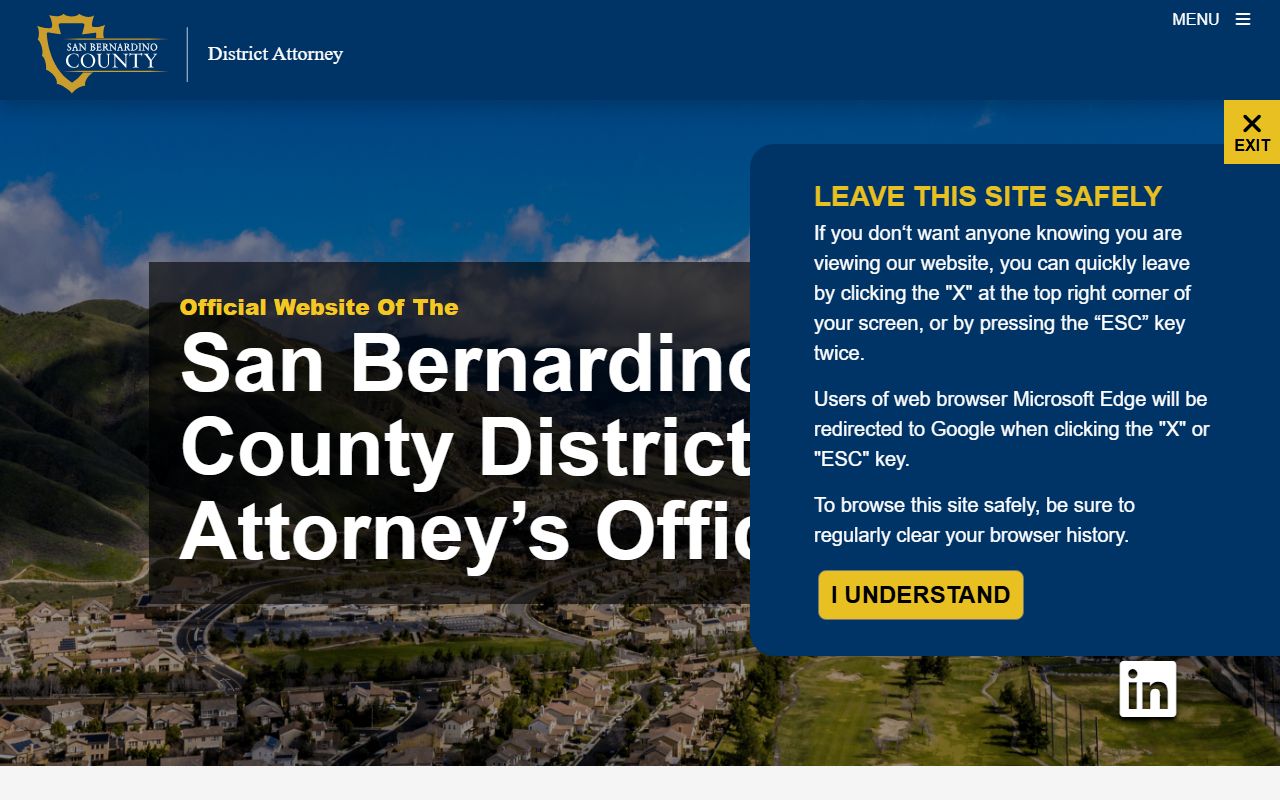
The San Bernardino County District Attorney prosecutes felony and most misdemeanor cases filed in the county. The office sits at da.sbcounty.gov and runs victim services, including a victim impact statement form and a digital victim advocate program.
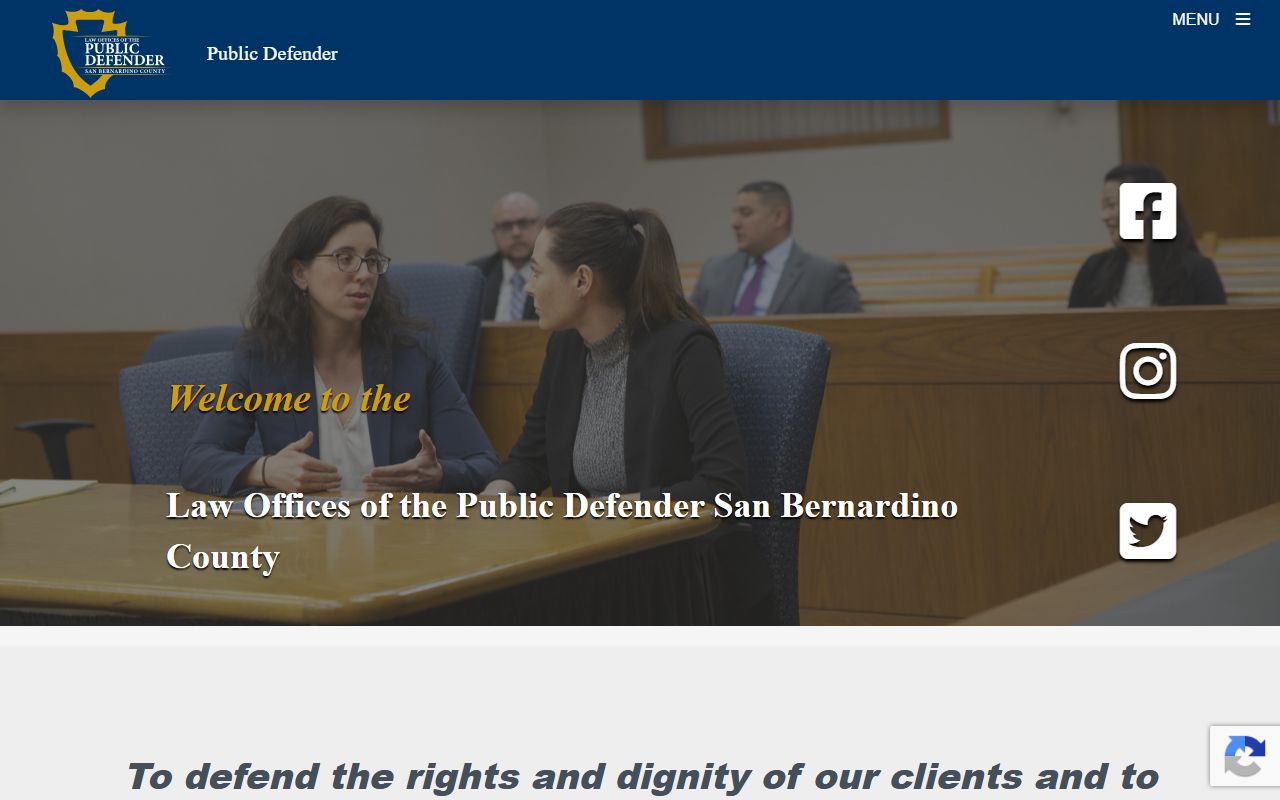
The county Public Defender represents qualifying adults and juveniles in criminal and civil commitment cases. The main site is pd.sbcounty.gov. The Public Defender FAQ explains scope of service and conflict referrals to alternate counsel.
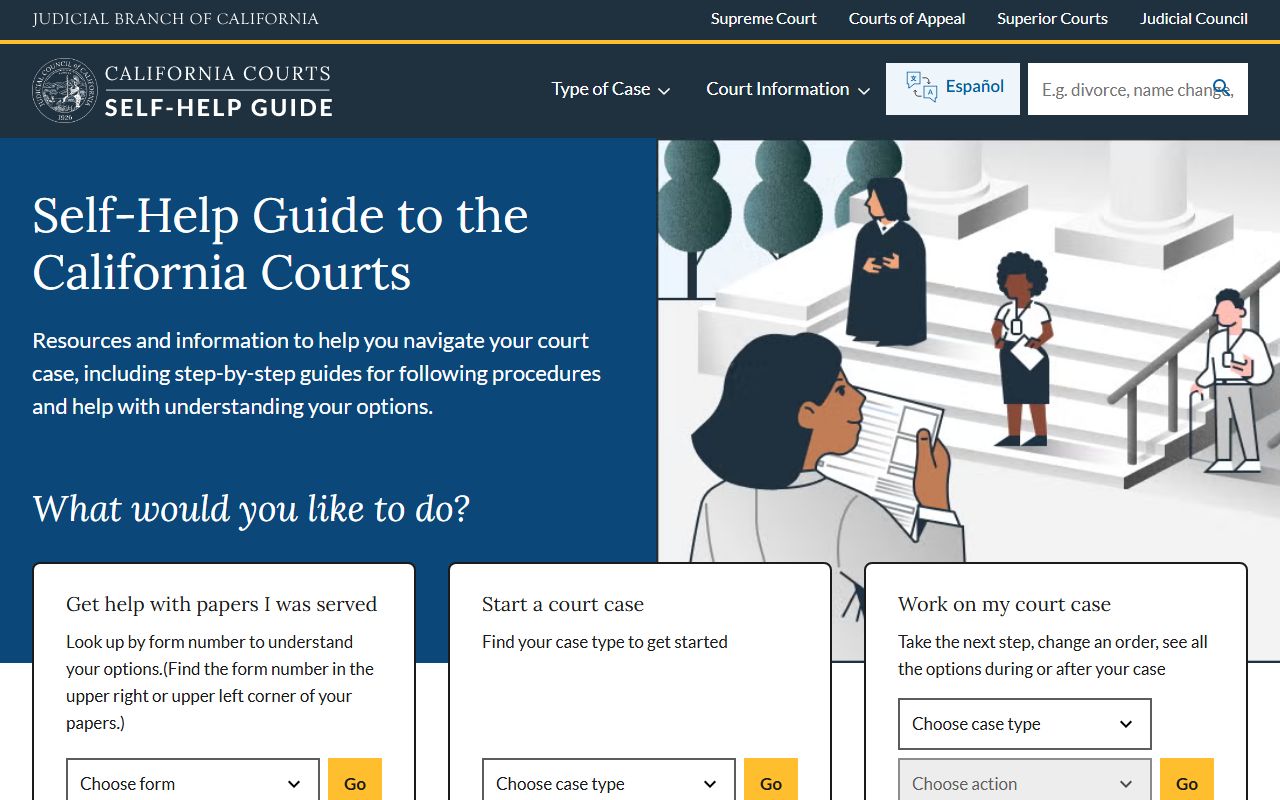
Self-help users can also start at selfhelp.courts.ca.gov for statewide forms and step-by-step instructions on common filings.
Local options include the San Bernardino County Bar Association lawyer referral, Legal Aid Society of San Bernardino, and Inland Counties Legal Services.
Frequently Asked Questions
Where do I search San Bernardino County court records?
Use the Court Access Portal (CAP) at cap.sb-court.org. CAP covers case search by case number, citation number, party name, or business name. It also handles court calendars, online case payment, and a warrant route. Case lookup is free. Party and business search needs a free CAP login. Online coverage is strong for cases filed in 1998 or later. Older paper files may need a phone call to the district where the case sits.
Can the County Clerk give me a divorce decree?
No. The Assessor-Recorder-County Clerk (ARC) does not keep court case records. Divorce decrees are court records, not vital records. Order divorce paperwork from the Superior Court division where the case was filed, in most cases the Family Law division at 351 North Arrowhead Avenue. Bring the case number or the party names. See marriage and divorce records for the full request process and fees.
How do I find an inmate in custody?
Use the Sheriff inmate locator at jimsnetil.shr.sbcounty.gov/bookingsearch.aspx. The tool supports a booking number search and a name search with date of birth or approximate age. State prison custody is at CDCR CIRIS. Federal custody is at the BOP locator. For full inmate roster details, the inmate records page covers fields, holds, and visit rules.
More on the San Bernardino County Court Records FAQ page.